Pillnitz Palace and Park sits beside the Elbe on Dresden’s eastern edge. Its riverside setting, gardens and buildings make it one of the most varied excursions from the city centre. You can travel by tram and bus, bicycle, car or seasonal riverboat. The grounds and museums have different opening seasons and ticket rules, so a good visit begins by deciding whether you want the park, palace interiors, the Palm House or a boat journey.
The complex is closely linked with the Saxon court and Augustus the Strong. Its Water Palace faces the river, while the Mountain Palace and New Palace frame the garden. The park contains formal beds, mature trees and the famous Pillnitz camellia. A trip can be a relaxed garden day or a more structured visit to exhibitions and rooms, depending on the season.
What is Pillnitz Palace?
Pillnitz is a riverside palace and garden complex rather than one isolated building. The Water Palace is oriented towards the Elbe, reflecting the importance of arrival by boat. The Mountain Palace stands opposite, and the New Palace closes another side of the ensemble. Their arrangement gives the central garden a formal frame while linking it to the wider park.

The architecture brings together Baroque design and influences that reflect the court’s taste for imagined distant cultures. Look at roofs, façades and the relationship between river and garden rather than expecting one uniform style throughout. The site changed over generations, so its current museum route contains layers of history.
A short history of the estate
Augustus the Strong developed Pillnitz as a place for court festivities and leisure away from central Dresden. Later Saxon rulers continued to use and alter it. The riverside setting made water travel part of the experience, and the gardens became an important component of the estate. Today the site is managed as heritage, with exhibitions explaining court life and the buildings’ changing roles.
Descriptions often focus only on the dramatic arrival by boat, but most visitors now come by road or public transport. The historic approach remains meaningful: from the Elbe you can understand why the Water Palace presents such a strong façade to the river. If you arrive overland, walk towards the riverside during your visit for that perspective.
The palace museum
The Schlossmuseum occupies parts of the historic buildings and presents the palace’s history. Rooms, exhibits and temporary displays can change. The museum is generally open in the main season, while the winter half-year has limited or no regular museum opening. Check the official Pillnitz calendar before making a special trip for interiors.
Allow time for both rooms and the park. A ticket described as “park” or “Palm House” may not include the same areas as a palace museum ticket. Read the actual inclusion list, especially when buying a combination or arriving with a card. Ask at the visitor centre if the current programme is unclear.
The gardens and landscape
The park is large enough for an unhurried walk through different garden spaces. Formal planting near the buildings contrasts with older trees and more open areas. In spring, flowers and the camellia draw attention; summer brings long daylight and outdoor foliage; autumn offers colour and a quieter atmosphere. Winter visits can still be pleasant, but some sections or exhibits may be closed.
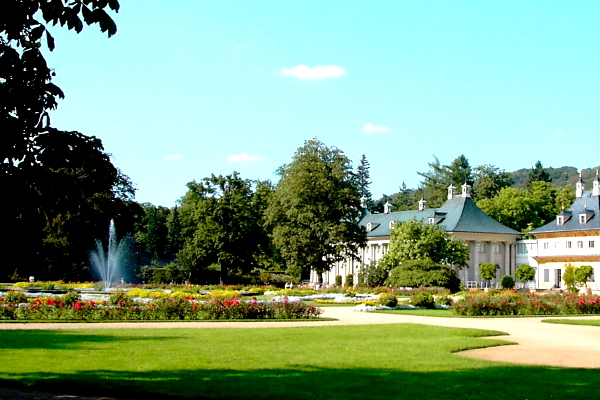
Wear comfortable shoes and allow for varying surfaces. The estate is much more spread out than a small city museum. Visitors with limited walking ability can focus on the central ensemble and selected garden paths instead of trying to cover every corner. Check the official accessibility information for entrances, toilets and any temporary route changes.
The Pillnitz camellia
The historic camellia is one of the park’s best-known plants. It has grown in Pillnitz for more than two centuries and is protected in colder weather by a movable glass structure. Flowering usually falls from late winter into spring, but the best dates vary with weather. The plant can be interesting even outside peak bloom because its care and protective system tell a story of long-term horticulture.
A popular legend connects its arrival to botanist Carl Peter Thunberg, but the palace’s own information notes that modern research has not proved that story. What is certain is that court gardener Terscheck planted the camellia at its current location in 1801. Present it as a historic plant with an uncertain origin rather than repeating the legend as fact.
Palm House and seasonal exhibits
The Palm House provides a warm indoor plant collection, especially appealing in colder months. It can have separate admission in winter and be included in a broader day ticket during the main season. The official site lists specific opening hours, holiday closures and concessions. The orangery and other seasonal displays may also operate on their own schedule.
Check which parts are open before choosing a travel date. A winter park walk with Palm House entry is a different experience from a summer visit to the palace museum and gardens. Neither is necessarily better; they serve different interests and weather conditions.
Central Dresden is convenient for a day trip to Pillnitz. A hotel near an Elbe route or public transport connection can simplify the journey.
Getting to Pillnitz by boat
A boat trip on the Elbe can make the journey part of the outing. Historic paddle steamers and other passenger boats operate routes from Dresden towards Pillnitz, with schedules depending on season, water levels and operator. Check the departure pier, travel time and return sailing before buying. A one-way cruise combined with public transport back can be practical if the times fit.

Do not assume every Dresden boat ticket includes palace admission. The ship journey and heritage site often have separate tickets. The Elbe boat tours guide compares river options. If mobility matters, verify boarding ramps and the walking distance from the landing to the palace entrance.
Arriving by public transport, bicycle or car
Trams and buses connect central Dresden with Pillnitz, though the journey can involve a transfer. Use the VVO planner for your date, stop and mobility requirements. A bicycle route along the Elbe can be pleasant in good weather; check current construction and riverbank conditions before riding. The Blue Wonder bridge and Loschwitz are potential stops on the way.
Drivers should use the official parking instructions and allow for busy weekends. Do not navigate to a palace façade that is pedestrian-only. If you plan a museum visit, note the closing time and last entry before parking. A car is convenient for combining Pillnitz with another outer Dresden sight, but it is not necessary for most visitors.
Ticket planning for 2027
The official site currently shows a distinct winter programme: daytime park access can be free until the end of March, while the Schlossmuseum is closed for regular visits. The Palm House has a separate winter admission, and special evening events such as Christmas Garden are independently ticketed. These details can change with the season and year, so check the current calendar rather than treating one ticket type as universal.
In the main season, read whether the day ticket includes park, museum and Palm House. Concessions, children, annual cards and guided tours may have different rules. A general Dresden attraction listing on an affiliate site does not automatically include Pillnitz. Use the official ticket and opening page for the specific palace offer.
Accessibility and pace
The central buildings and park have different surfaces and routes. Check step-free access for the particular museum rooms you want; a garden path may be manageable while a historic interior has limitations. Ask about accessible toilets, seating and the distance from bus stop or boat landing. If you cannot walk far, choose a small set of highlights.
Allow two to four hours for a general visit, more if you take a long boat journey or explore the full park. A rushed schedule is especially unhelpful in spring, when visitors may wait to see the camellia. Plan a meal or café break based on current opening times, as seasonal facilities are not always available.
Nearby sights
Pillnitz can be paired with Loschwitz, the Blue Wonder or the Elbe castles, though all together would make a long day. For a first visit to Dresden, see the central sights overview before deciding how much time to give to an excursion. The palace offers a different perspective on Saxon court life from the inner-city Royal Palace.
Browse city attractions and available excursions. This general listing is not automatically a Pillnitz palace ticket; confirm each product’s inclusions.
A relaxed day at Pillnitz
Start by checking the seasonal ticket and the most important opening time. If the museum is operating, visit it early and then move into the garden at your own pace. Follow the central paths past the Water Palace and Mountain Palace, leave room to see the camellia or Palm House, and finish by the river. This order can be changed when a boat departure sets the day’s timetable.
If you arrive by ship, first take in the Water Palace from the landing side. The view explains why river arrival was part of the historical design. Check where the visitor centre and ticket entrance are before crossing the grounds. A boat journey can be longer than a tram or car trip, so avoid scheduling a timed museum tour too close to the expected arrival.
Visiting with children
The open grounds can be more appealing to children than a long sequence of palace rooms. Choose a short garden route, look for seasonal plants and include a break. Check whether family programmes or hands-on exhibitions are available on your date; these are not guaranteed daily. Children should stay on paths and avoid touching historic plants or entering closed garden areas.
Strollers may be practical on main routes, but surfaces and interior access vary. Ask the site for current guidance if a step-free route is essential. Bring water in summer and extra layers for a windy riverside visit.
Photography and the river setting
From the riverfront, the palace buildings can be photographed together with the Elbe. Inside the park, smaller architectural details and long paths create different compositions. Morning and evening light can change the appearance of façades and water, but access hours may limit when you can enter particular areas. Photography rules inside exhibitions may differ from the outdoor park.
A river cruise offers another viewpoint, though you should not assume a boat will pause for photographs at the ideal angle. If taking pictures is a priority, plan time to walk along the riverbank as well. Respect private events, planted beds and any temporary barriers.
Food and facilities
Cafés and restaurants can operate seasonally on or near the estate. Check the current options if you depend on a meal at a specific time, particularly in winter. Toilets and seating are available in designated areas, but distances within the park can be significant. Plan a rest near the centre before a longer garden walk.
For visitors with dietary needs, bringing a small snack can help when seasonal facilities are limited. Keep food away from collection rooms and follow park rules about picnics. A leisurely visit leaves room for a meal without rushing the return boat or bus.
Frequently asked questions
Is the Pillnitz park free?
Winter daytime access can be free, while main-season admission rules differ. Check the official calendar for your date.
Is the palace museum open in winter?
It is normally closed for regular visits during the winter half-year, though selected tours or events may run.
Can I get there by boat?
Yes, seasonal Elbe passenger services can reach Pillnitz. Check the current timetable and return options.
When does the camellia bloom?
Usually late winter to spring, depending on conditions. Confirm the seasonal display dates if it is your main reason for visiting.
Planning summary
Pillnitz combines a riverside palace, park and horticultural highlights. Choose your season and ticket deliberately, verify the museum and Palm House hours, and make transport part of the experience when a boat timetable suits you.
4 thoughts on “Pillnitz Palace – Boat trip on the Elbe from Dresden”