Brühl’s Terrace is a broad riverside promenade on the historic centre’s Elbe bank, often called the “Balcony of Europe”. The terrace stretches for about 500 metres between Augustus Bridge and the area near Carola Bridge. It is free to walk along and offers views over the river, the opposite bank and Dresden’s old town. The promenade is lined with major historic buildings and connects naturally with the Albertinum, Frauenkirche and Neumarkt.
Although it feels like an elevated public balcony, the terrace began as part of Dresden’s fortifications. Its later transformation into a private garden under Count Heinrich von Brühl gave it its current name and character. Today it is one of the easiest places to understand Dresden’s relationship with the Elbe: look outward to the river landscape, then back towards the city façades.
Accommodation in Dresden
Staying near the main station, old town or a convenient tram line makes a zoo visit easy to combine with the rest of Dresden. Compare location, cancellation terms and accessibility details before booking.
What is Brühl’s Terrace?
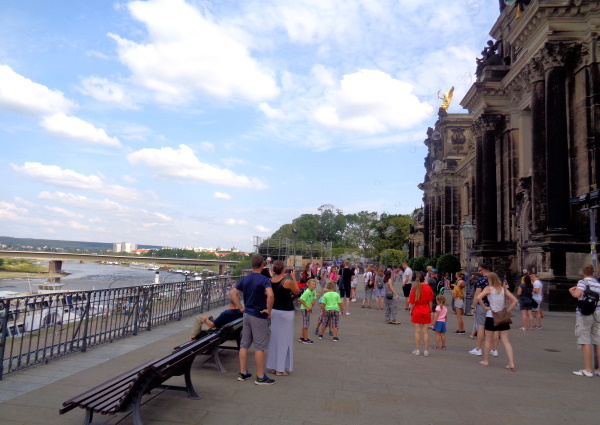
The terrace is a raised walkway along the riverfront, framed by buildings including the Academy of Fine Arts, the Albertinum and the former Saxon parliament complex. The name comes from Heinrich von Brühl, a powerful minister in the eighteenth-century Saxon court. He received parts of the old fortification and developed a garden and palace here. The private grounds later became accessible to the public and evolved into a major urban promenade.
Its nickname reflects the view, but the terrace is more than a viewpoint. It is part of the city’s historic defensive edge and contains layers of architecture and urban history. Beneath it are remains of Dresden Fortress, accessible through a separate museum visit. The present promenade can be explored freely, while entering museums or historic interiors requires separate tickets.
Views over the Elbe
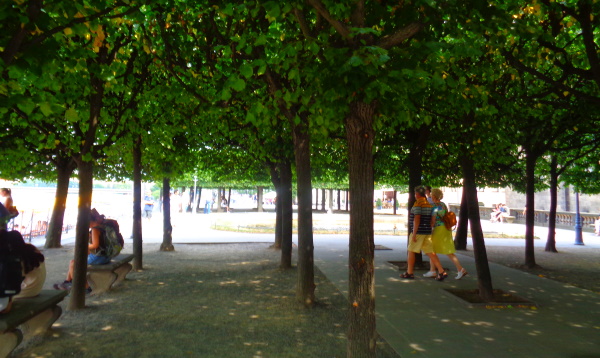
From the terrace, look across the river towards the Neustadt, river meadows and bridges. The panorama changes with weather and season. In summer, boats and walkers animate the river; in winter, bare trees make architectural details easier to see. The view is particularly good near the balustrades, but crowds can gather at the most popular photo points.
For a wider city perspective, cross Augustus Bridge or take an Elbe cruise. Our Augustus Bridge guide explains the nearby crossing, while the Dresden boat trips guide covers options on the river. The terrace itself is a pleasant place to pause before or after either activity.
Architecture and landmarks along the promenade
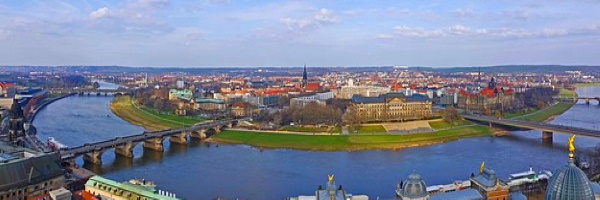
At the eastern end stands the Albertinum, home to the Galerie Neue Meister and Sculpture Collection. The Academy of Fine Arts, with its glass dome known as the lemon squeezer, is another distinctive landmark. Around Schlossplatz, the Hofkirche and Royal Palace add a monumental backdrop. The terrace therefore makes a compact walking route between several of Dresden’s most important buildings.
Use the walk to orient yourself before choosing interiors to visit. The Albertinum is suited to modern art and sculpture; the Royal Palace houses historical collections; and the nearby Frauenkirche is an active church. Opening hours and tickets are separate for each.
Accommodation in Dresden
Stay near the old town for easy access to museums, the Elbe and public transport. Compare locations and cancellation conditions before booking.
Access and walking route
You can reach the terrace from several points, including Schlossplatz and stairs near the Albertinum. For step-free access, a lift at the Ständehaus provides a route from Schlossplatz, with published dimensions suitable for many wheelchairs. Another approach near the Albertinum has a sloping driveway. Check current access information and lift status if you depend on it, because temporary maintenance can affect the route.
The paving is mostly manageable but can be uneven or crowded. The promenade has long straight sections and benches, though the number of resting places may vary. If you have limited stamina, walk one section and return by the same route rather than trying to cover the full length plus the old town in one go.
How much time should you allow?
A direct walk takes around 15–20 minutes, but most visitors spend 30–60 minutes stopping for views and photos. Add another hour or more if you enter the Albertinum or Dresden Fortress. The terrace works well as an early morning stroll or an evening walk, but access to buildings is limited to their own opening schedules.
Best time to visit
Early morning is quieter and provides softer light for photographs. Late afternoon can illuminate the opposite bank and the old town, depending on season and weather. At night, the architecture is lit in places, but the details of the river view are less visible. The terrace is popular throughout the year, so expect more people during summer weekends and major events.
Nearby sights and itinerary
Start at the Albertinum, walk west along the balustrade, then descend towards Schlossplatz and the Frauenkirche. Continue to Neumarkt, the Fürstenzug and the Zwinger for a compact old-town circuit. If you have a full day, choose one museum and one church interior rather than attempting every attraction.
The Dresden sights overview and museum guide help you build a route. A guided walk can add historical context; Tiqets currently lists Dresden walking tours, but check the route and language because not every tour includes Brühl’s Terrace. This public promenade does not need a ticket.
Practical advice
There are cafés and restaurants nearby, though not every terrace section has facilities directly on the promenade. Use public toilets in nearby attractions or restaurants and check whether a purchase or fee is required. Keep an eye on bicycles and delivery traffic where paths connect to surrounding streets. Do not lean over barriers or climb onto historic masonry for photographs.
Visitors with mobility needs should choose the Schlossplatz lift route and check that it is operating. Families with strollers may find the main terrace straightforward but should expect stairs at some entrances. In wet or icy weather, stone surfaces can be slippery.
Frequently asked questions
Is Brühl’s Terrace free?
Yes. The promenade is public and free. Museums and fortress interiors below it have separate admission.
How long is the terrace?
It extends for approximately 500 metres along the Elbe between the Augustus Bridge area and the eastern riverfront.
Can I access it without stairs?
Yes, a step-free route is available from Schlossplatz using the lift at the Ständehaus, subject to operation. Check current accessibility information.
What does “Balcony of Europe” mean?
It is a popular nickname for the elevated promenade and its views over the Elbe and Dresden.
Is there a ticket for the terrace?
No. A ticket is only needed for attractions or events in nearby buildings.
Planning summary
Brühl’s Terrace is an easy, free walk that combines river views with close access to Dresden’s main historic buildings. Use the step-free Schlossplatz approach if needed, check lift status and leave time to explore one or two neighbouring sights.
More Dresden activities on Tiqets
Browse available attraction tickets, tours and city experiences. Check each listing for the exact venue and inclusions.
History beneath your feet
The terrace occupies part of Dresden’s former city fortifications. Sections of the old defensive system remain below the promenade and can be explored at Dresden Fortress, which has a separate entrance and ticket. Brühl’s garden transformed this edge of the city into a private leisure space in the eighteenth century. Later public access changed the terrace into a place for strolling and looking across the Elbe.
This sequence helps explain why the terrace feels both monumental and open. The high retaining wall marks an older defensive boundary, while the balustrade and trees create a leisurely promenade above the river. The buildings along the route were added or rebuilt in later periods, so the present appearance reflects several centuries rather than a single design moment.
Suggested walking itinerary
Start near the Albertinum and walk west along the terrace to Schlossplatz. Pause at the river-facing balustrade, then descend by the stairs or use the lift route if needed. Continue towards the Frauenkirche and Neumarkt, and finish at the Zwinger or Semperoper. This itinerary keeps distances modest while showing several sides of Dresden’s historic centre.
If you have more time, include a river cruise or cross Augustus Bridge to Neustädter Markt and the Golden Horseman. The complete route becomes a comfortable half-day, especially if you stop for coffee or enter a museum. Check opening schedules before adding interior visits.
Terrace at different times of day
Morning brings quieter paths and clear views of building details. Midday is often busier, particularly in summer and during school holidays. At sunset, the Elbe and rooftops can take on warm colours, but the exact effect depends on weather and season. In winter, dress warmly: the open riverfront can feel colder and windier than the sheltered streets a few metres away.
Rain does not make the promenade impossible, but stone paving may be slick. After heavy rainfall, use caution on ramps and stairs. Some benches and exposed viewpoints may be wet, so plan a nearby indoor stop if you need a longer break.
Events, services and crowd etiquette
Brühl’s Terrace is a public route and an active part of the city, not a controlled museum corridor. Events, demonstrations or building works may temporarily alter access. Follow temporary signs and leave space for people passing. Keep noise low near church and museum entrances, and do not block the route while photographing.
During major city events, the terrace can become crowded. If you prefer a quiet walk, choose an early weekday or visit outside festival periods. Check local notices if an event is the focus of your trip, because viewing points may be restricted.
How the terrace connects Dresden’s landmarks
Brühl’s Terrace links several layers of the old town in one easy walk. At its eastern end the Albertinum presents nineteenth-century and modern art; towards Schlossplatz the route opens to the Hofkirche, palace and riverfront. A few minutes farther brings you to Neumarkt and the Frauenkirche. This proximity makes the terrace useful for visitors who want to orient themselves before choosing a museum or guided tour.
It also provides a convenient pause between indoor attractions. After spending time in galleries, the open sky and river view offer a change of pace. In the opposite direction, a short walk to Augustus Bridge gives a direct connection to Neustädter Markt and the Golden Horseman. From there you can continue along Hauptstraße or return to the old town.
Public promenade versus paid attractions
The terrace itself is a public outdoor space, so there is no admission ticket or gate. Nearby attractions have separate charges and opening hours. Dresden Fortress, in the historic casemates beneath the terrace, is a distinct museum experience; the Albertinum is another separate venue. A city walking tour may pass along the promenade, but check the itinerary and language rather than assuming it includes access to any building.
For online browsing, Tiqets lists Dresden tours and attractions, but these are optional additions to a free walk. Read the product details carefully for meeting point, duration, language and cancellation terms. If you only want the terrace and its views, simply walk there on your own.
Taking a break along the river
There are benches and places to pause near the terrace, and cafés are close by in the old town. The promenade itself is exposed to sun and wind, so choose a sheltered seat when the weather changes. In summer, carry water; in winter, the river breeze can feel colder than the city streets. Public toilets are more likely to be found inside nearby attractions or businesses, so check before starting a longer walk.
With children, use the balustrade areas carefully and keep them close to the river edge. The terrace is a walking route, not a playground, and bikes or event equipment may appear at busy times. For visitors with mobility limitations, plan the lift approach and confirm it is in service; steps at other entrances can be steep.
More Dresden activities on Tiqets
Browse available attraction tickets and tours; check each listing for exact inclusions.
3 thoughts on “Brühlsche Terrasse Dresden (Bruhl Terrace)”