Panometer Dresden turns a former gasometer into a place for large-scale visual storytelling. Instead of walking through a conventional sequence of paintings, you enter a cylindrical building and look at a 360-degree panorama by artist Yadegar Asisi. Light, sound and an accompanying exhibition help visitors understand the subject. The panorama changes, which makes checking the current exhibition essential before you travel.
The earlier version of this guide described Dresden 1945 as if it were the permanent display. It is a past exhibition. The operator currently presents Great Barrier Reef, an underwater panorama. This guide explains the experience and practical visit without promising that the same theme will still be on show on every future date.
Accommodation in Dresden
Staying near the main station, old town or a convenient tram line makes a zoo visit easy to combine with the rest of Dresden. Compare location, cancellation terms and accessibility details before booking.
What is the Panometer Dresden?
“Panometer” combines panorama and gasometer. The round industrial building was originally associated with gas storage. Its interior now provides a vast surface for a panoramic artwork viewed from inside. A visitor tower near the centre allows a different perspective from above, while changing lighting and sound shape the atmosphere.
This is not a typical fine-art gallery where you move from one framed work to the next. The main image surrounds you. You can take in the whole scene, then notice small details that were easy to miss at first. Allow time to stand still and look in several directions; a fast lap around the edge does not convey the scale.
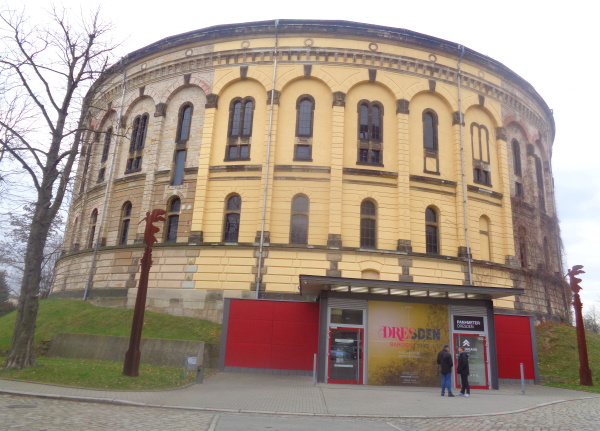
Current exhibition: Great Barrier Reef
The official Panometer Dresden site currently advertises Asisi’s Great Barrier Reef. The panorama presents an underwater world inspired by the coral reef ecosystem. Visitors can view the scene from different heights and focus on sea life, colour and the structure of the reef. The presentation is an artistic interpretation rather than an actual dive or a scientific aquarium.
If your main reason for visiting is Dresden’s wartime history, check the current programme carefully. Dresden 1945 has been shown at the Panometer in earlier periods and is described in the operator’s archive, but it is not safe to assume it is on display now. The same applies to the previous Baroque Dresden panorama. Exhibitions rotate, and the subject can change again.
The official Panometer homepage names the current panorama. Check it shortly before buying and again before travel if you booked well in advance. The accompanying exhibition and any special programme may also differ from what an older review describes.
How does a visit work?
After entry, take time to understand the subject through introductory displays, then enter the panorama space. Look from floor level before using the central viewing structure if it is accessible to you. A higher viewpoint changes the relationships among parts of the image. Return to a detail afterwards; the sequence helps you notice how the artwork is constructed.
Light effects can simulate changes in the scene. A complete cycle may be more rewarding than leaving as soon as you have photographed the room. Sound and darkness may affect visitors who are sensitive to sensory effects, so ask staff what to expect if that matters to you.
For most visitors, around one to two hours is a reasonable plan. Someone who reads the accompanying material closely may take longer. Families can enjoy looking for details in the panorama, though young children may prefer a shorter visit. This is an indoor attraction and therefore useful on a rainy Dresden day.
Tickets and admission prices
The operator’s published price page currently lists €16 full admission, €14 reduced, €8 for ages 6–16 and free entry for children under six under its conditions. A family ticket is listed at €40 for up to two adults and two children aged 6–16, with an extra charge for additional children. These figures can change; check the official ticket page before visiting.
The Panometer states that tickets can be bought on site or through its online seller and that advance online purchase is not generally required. Groups, annual tickets and certain combinations have separate rates. If you plan the Panometer and the Royal Palace, compare the officially listed combination with separate admissions and read exactly what it includes.
The old €11.50 adult price for a Dresden 1945 exhibition is obsolete. Do not use it for a 2027 visit. Similarly, a generic Tiqets page for Dresden activities does not establish that it sells Panometer admission.
Opening hours
Regular hours listed by the Panometer are 10 am–5 pm Monday to Friday and 10 am–6 pm on weekends and public holidays. Last entry is one hour before closing. Special dates can differ; the operator lists closures and shortened hours separately. Check the current hours page on your travel date.
Last admission is particularly important if you are combining the Panometer with museums in the old town. Reaching the building requires a transfer, and you need time to experience the panorama after entry. Arriving just before the last ticket sale is unlikely to make a relaxed visit.
Getting to the Panometer
The address is Gasanstaltstraße 8b, in Dresden-Reick, away from the compact historic centre. Bus 64 stops at Nätherstraße close to the site. The operator also lists tram lines 1 and 2 to Liebstädter Straße followed by a walk of about ten minutes, and Dresden-Reick S-Bahn station followed by a walk of roughly ten minutes. Verify current transport service before setting out.
Visitors driving can use free parking provided for exhibition visitors according to the current operator information. Coach access has a specific route because of the narrow approach; drivers should use the official instructions rather than ordinary car navigation alone. If accessibility matters, ask about the route from the stop or car park and access to the viewing tower.
The Panometer is not beside the Zwinger. Allow travel time between the two. For a first Dresden visit, group nearby old-town sights together and put the Panometer in a separate part of the day.
Is it suitable for children?
The scale and changing light can appeal to children, especially when the subject is an underwater ecosystem. Younger visitors may not want to spend as long reading the contextual exhibition, so focus on visual observation. Ask them to identify features they can see from the floor and then from the tower. The shift in viewpoint is an easy way to make the artwork meaningful.
Families should check whether prams can use every part of the route and where toilets are located. The admission categories distinguish children under six from those aged 6–16. Compare a family ticket with separate tickets for your actual group, especially if there are more than two children.
Accessibility and sensory considerations
A former industrial building may have particular access arrangements. Consult the operator’s current accessibility guidance or contact visitor services with specific questions about step-free routes, toilets and the tower. It may be possible to enjoy the panoramic image from the lower level even if a higher platform is unsuitable, but confirm your needs in advance.
Sound, dimming lights and a large enclosed space are part of the presentation. Visitors who need a quieter experience can ask staff whether certain times are less busy and how the light cycle works. Bring an extra layer if you are sensitive to indoor temperature; a gasometer does not feel exactly like a small gallery room.
Dresden 1945: understanding the former panorama
Asisi’s earlier Dresden 1945 panorama addressed the destruction of the city during the air raids in February 1945 and the subsequent question of reconstruction. Its subject is historically important, but the artwork was an interpretation, not a documentary photograph. The exhibition has appeared in the Panometer in different periods and belongs to its history.
Travellers interested in that story can explore the reconstructed Frauenkirche, the Royal Palace and the city’s museums. A visit to Bautzner Straße Memorial addresses a different, later chapter of Dresden’s twentieth-century history. Keep those subjects distinct.
If Dresden 1945 returns in a future rotation, the operator’s current exhibition page will provide the relevant dates. Do not buy a ticket on the assumption that an old video or photo shows the current panorama.
Baroque Dresden and other past panoramas
The Panometer has also presented a Baroque Dresden panorama linked to the city’s eighteenth-century court culture. This subject connects to the Fürstenzug, the Zwinger and the collections associated with Saxon rulers. As with Dresden 1945, it is a past presentation rather than a permanent room you can count on seeing today.
The rotation is a strength for repeat visitors but a challenge for travel planning. Search results can display archived exhibition pages as if they were current. Always start with the venue’s homepage, then verify the date on the ticket product.
Tiqets and other Dresden tickets
At the time of checking, we did not find a confirmed Panometer admission product in the general Tiqets Dresden selection. The following box offers a separate Dresden activity rather than implying entry to the panorama. Buy Panometer admission through its official ticket information if this attraction is your priority.
Another Dresden activity on Tiqets
Explore city attractions for a different part of your trip. This is not a Panometer ticket; read the exact product before booking.
Combining the visit with other places
The Panometer works as a half-day activity if you include transport. You could spend the morning in the Old Masters Gallery and visit the panorama in the afternoon, provided opening times and travel allow. Or make it the main indoor stop on a rainy day and save the Elbe boat trip for better weather.
Families who enjoy large-scale visuals may also consider TimeRide Dresden, a different attraction using virtual reality. The two experiences use different technology and ticketing. Choose based on the current exhibition subject and the visitor’s tolerance for screens, sound or headsets.
Where to stay
Most visitors need not stay near the Panometer itself. An old-town or station hotel gives better access to Dresden’s other sights, with a public transport ride to the gasometer. Check your route from the hotel for the date and time you plan to go.
Accommodation in Dresden
Compare central hotels and convenient transport connections for a Panometer visit. Read cancellation and accessibility details before booking.
Video about the Panometer
This existing video may show an earlier exhibition. It illustrates the building and presentation style, but the official homepage is the source for the currently displayed panorama.
Frequently asked questions
Is Dresden 1945 the current exhibition?
No. The operator currently advertises Great Barrier Reef. Exhibitions rotate, so check the current programme for your visit.
How long should I allow?
Plan one to two hours for the exhibition itself, plus transport from central Dresden. Allow more if you like to read the accompanying displays.
Do I need an advance ticket?
The operator says advance online booking is not generally necessary. A fixed group visit or special event may have different arrangements; check current instructions.
Is the Panometer in the old town?
No. It is in Dresden-Reick at Gasanstaltstraße 8b. Use current local transport information or the venue’s driving directions.
Does the SKD museum card cover it?
Do not assume so. The Panometer is not one of the Dresden State Art Collections museums covered by their standard two-day ticket. Check any separately advertised combination.
Other travel guides on our portals
For future trips, see our Venice travel guide and the linked German destinations below. These are separate travel guides, not part of the Panometer exhibition.

More destinations in Germany
Before your visit
Check the current panorama title, opening date and price on the Panometer website. Plan the transfer to Dresden-Reick, and leave enough time for a complete light cycle. That is the simplest way to enjoy the scale of the artwork without confusing an archived exhibition with the one on show today.
2 thoughts on “Panometer Dresden”